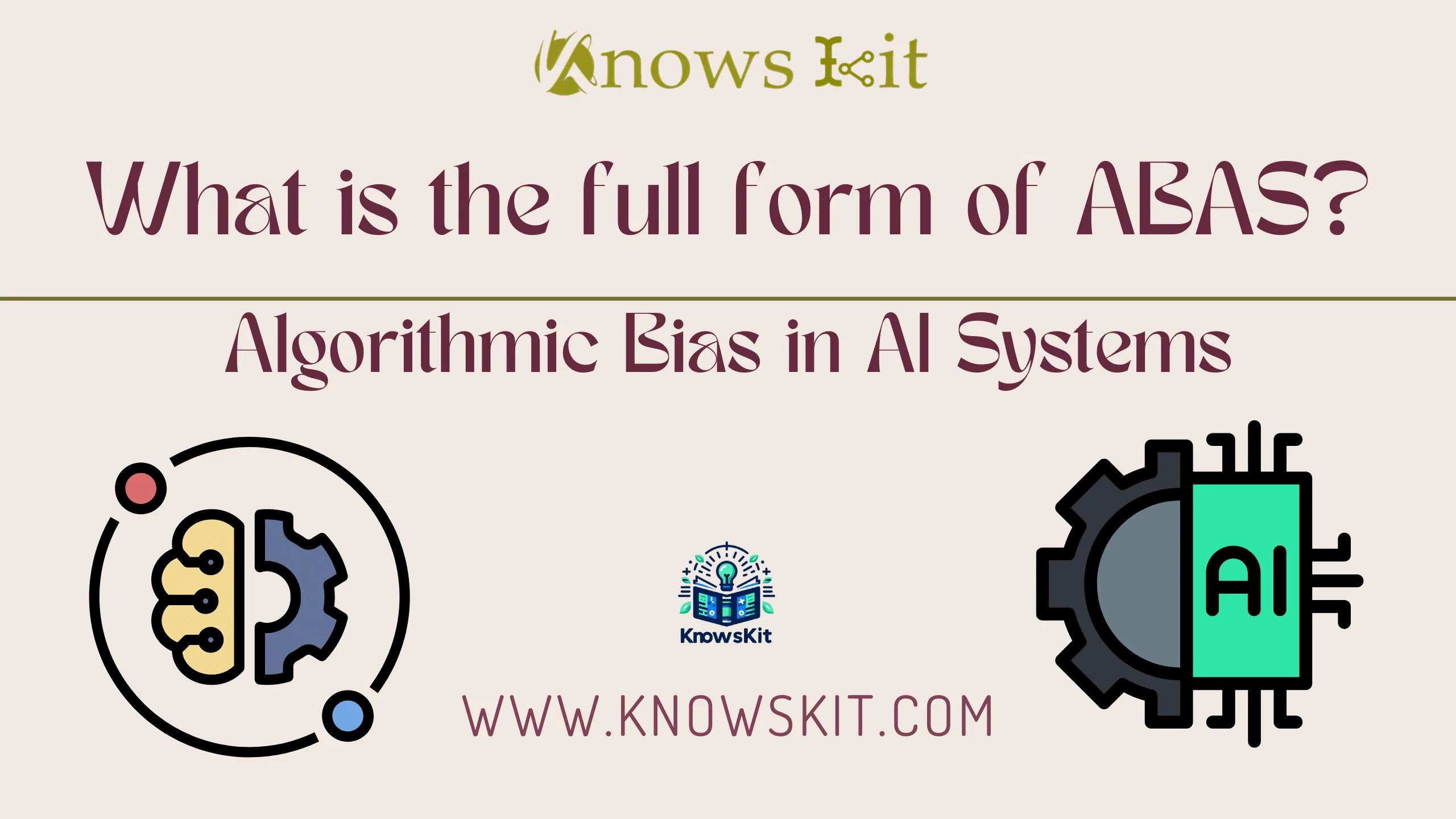
ABAS 的全称是什么?
ABAS:人工智能系统中的算法偏差
因此,您偶然发现了以下缩写词 ABAS and are scratching your head, wondering what it stands for? Let me break it down for you in a way that’s easy to digest. ABAS 代表 Algorithmic Bias in AI Systems. It might sound a bit technical at first, but I promise to keep things as simple as pie. Let’s dive into what this really means and why it’s a hot topic in today’s tech-driven world.
Understanding the Full Form of ABAS
当我们谈到 ABAS, we’re diving deep into the heart of artificial intelligence (AI). AI, as you probably know, is all about creating machines or software that can think, learn, and make decisions somewhat like us humans. But here’s the kicker: sometimes, these AI systems can pick up or even amplify biases. This is where Algorithmic Bias in AI Systems comes into play.
Algorithmic bias refers to a situation where AI systems might make decisions that are unfairly prejudiced against certain individuals or groups. Imagine applying for a loan and getting rejected not because of your financial situation but because the AI system has a bias against people from your area or background. That’s algorithmic bias in a nutshell, and it’s a big deal because it can affect everything from job hiring to law enforcement.
Why Is ABAS Significant?
The significance of ABAS can’t be overstated. In a world increasingly run by algorithms, ensuring these systems are fair and unbiased is crucial. Think about it: if AI is going to help make big decisions in healthcare, education, and employment, we need to be absolutely sure it’s treating everyone equally. ABAS is all about identifying, understanding, and correcting these biases to make AI as fair and equitable as possible.
Applications and Impact
The relevance of ABAS spans multiple sectors:
- 医疗保健: Ensuring AI diagnoses and treatments don’t favor one demographic over another.
- 财务: Making sure AI in banking and loans doesn’t discriminate based on zip code or background.
- 执法: Guaranteeing predictive policing tools don’t unfairly target specific communities.
Addressing ABAS means making the digital world a fairer place for everyone. It’s about ensuring the future of AI is as bright and unbiased as we’ve always hoped it would be.
So, Why Should You Care?
Well, regardless of whether you’re a tech whiz or just someone who uses a smartphone, ABAS affects all of us. It’s about making sure the technology serves humanity fairly and justly. By understanding and addressing Algorithmic Bias in AI Systems, we can work towards a future where technology uplifts everyone, not just a select few.
Wrapping Up with a Look at Other ABAS Full Forms
To cap things off, let’s broaden our horizons a bit. ABAS, like many acronyms, wears multiple hats depending on the context. Here’s a table highlighting 8 other full forms of ABAS 跨越各个领域:
| 现场 | 缩略语 | 完整表格 |
|---|---|---|
| 商业 | ABAS | Adaptive Behavior Assessment System |
| 教育 | ABAS | Association for Behavior Analysis International |
| 医疗保健 | ABAS | Adult Behavior Assessment Scale |
| 技术 | ABAS | Automated Biometric Authentication System |
| 财务 | ABAS | Accounting and Business Advisory Services |
| 体育 | ABAS | Athletic Bilateral Asymmetry Score |
| 环境 | ABAS | Airborne Broadband Area Surveillance |
| 交通运输 | ABAS | Automated Bus Announcement System |
In bold: These diverse uses of ABAS show just how versatile this acronym is, stretching from the realm of AI and tech to healthcare, business, and beyond. Each of these represents a unique aspect of human endeavor, showing how acronyms like ABAS can bridge worlds.
Remember, whether we’re discussing Algorithmic Bias in AI Systems or any other interpretation, the acronym ABAS encompasses a range of ideas and innovations across various industries. Understanding these different contexts enriches our grasp of the complex world we navigate daily.