Mastering Instagram Analytics: Key Metrics for Growth in 2025
You may consider it a challenge to grasp Instagram analytics, as it will feel like a foreign language at first, but the platform with over a billion monthly users will surely pay off once mastered. The emergence of social media has changed the way we connect, share, and form online communities. If you are a student conducting research on social media trends or are merely curious about your content’s performance, it is possible to feel that learning Instagram analytics is like taking a shortcut – slippery and overwhelming at first but oh-so-satisfying once you get it right.
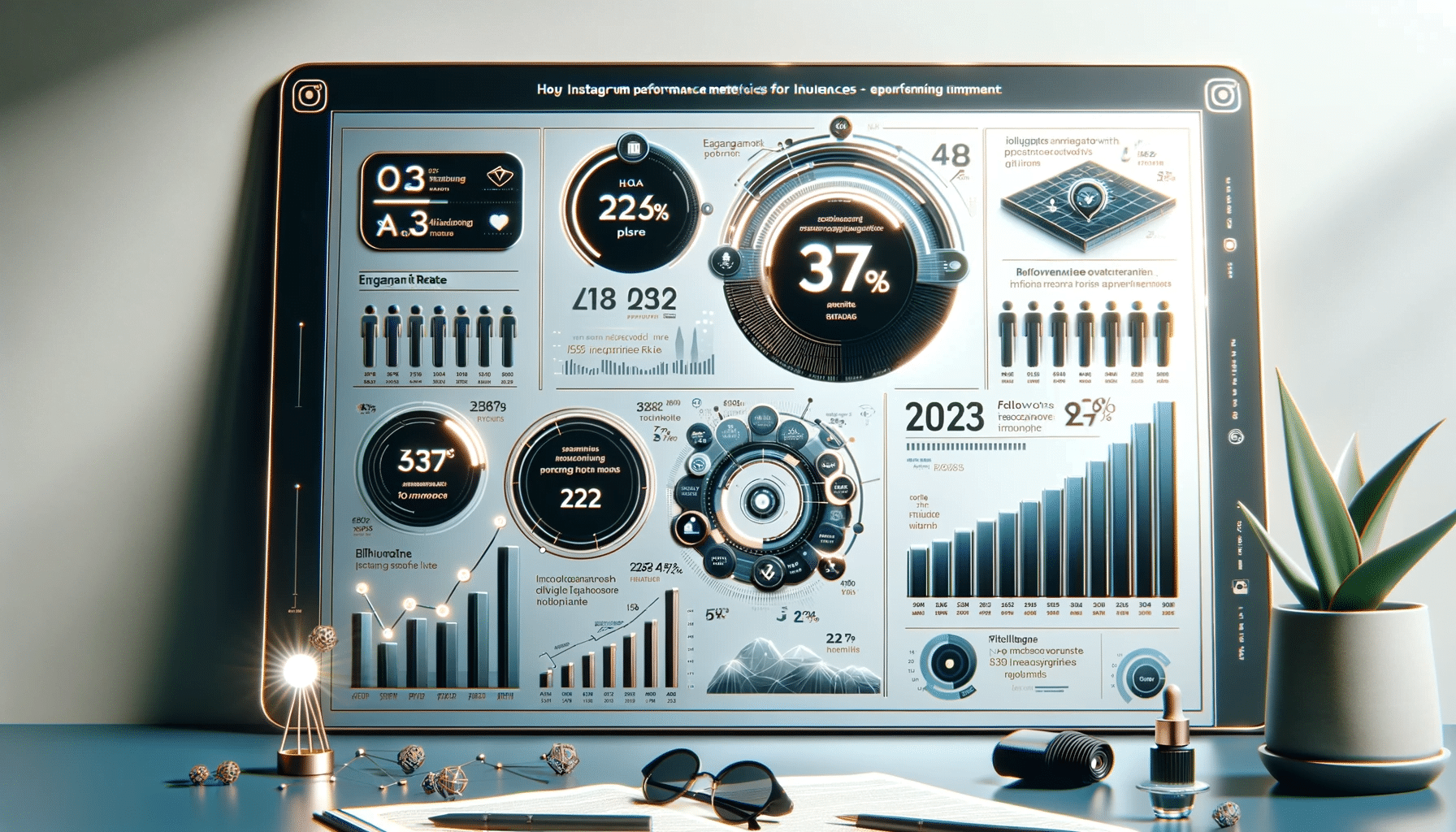
You can view Instagram analytics as a backstage pass to the performance of your profile. The same way a scientist or a research team gathers a lot of data to learn the answers to their questions is what Instagram analytics does for you—giving a tangible piece of information about things that work, those that don’t, and why. Let’s get into numbers, graphs, and insights, which are the fascinating tools that explain the story behind every post, story, or reel.
Why Analytics Matter in 2025
The days of simply posting great-looking shots on Instagram to grow have gone. Nowadays, the platform rewards content creators who have a solid understanding of their audiences. “Using Instagram without analytics is like driving with your eyes closed—you might reach a destination, but you probably won’t know where you are going,” said one of the university professors I know.

For students and researchers, the Instagram analytics tool is a treasure trove of data about behaviors. Each metric tells a part of the bigger story of how humans do their thing in the interconnected digital world. So, let me summarize the findings and how you can make use of them for your goals.
Essential Instagram Metrics Decoded
Instagram provides you with a large number of metrics, which can be overwhelming. However, let’s narrow it down to the essentials that truly make a difference and the insights they give you about your content.
Engagement Metrics: The Heart of Analytics
Engagement metrics encompass the amount of interaction with your content. They are like applause after a show—immediate feedback about how the audience responds.
- Likes: The digital form of a thumbs-up. While likes may seem trivial, they indicate that the content resonates with viewers on an emotional level.
- Comments: They are priceless! Comments show that users are deeply engaged and that they are open to having meaningful discussions with the audience.
- Saves: Possibly the most important metric right now. When someone saves your post, they call it valuable information—something worth coming back for.
- Shares: The digital ogoh is a mouthpiece. When people share your content, they’re putting their social reputation on the line in support of your message.
Dr. Jamie Chen, a social media researcher, noted: “I always encourage my students to focus more on saves than likes. Likes are often instinctive, while saves are deliberate and true indicators of value.”
Reach and Impression Metrics: How Far Your Voice Carries
This metric measures the content distribution area:
- Reach: The total number of unique accounts that see your content. Just like counting different faces in a crowd.
- Impressions: The normal method of counting the impression where the same person may be counted many times for viewing the post.
- Follower Growth: The net effect on follower count over time. It may show the long-term issues faced by the company regarding growing or declining audiences.
There are amazing relationships between reach and engagement. High reach with low engagement? Your content could draw the wrong attention. Low reach but high engagement? You’ve found your tribe—now focus on expanding that circle.
Profile Metrics: Understanding Visitor Behavior
Your Instagram serves as a digital storefront. The metrics here depict how people engage with it:
- Profile Visits: The number of times users have checked out your profile page.
- Website Clicks: The count of users who clicked on the link in your bio—one of the most essential conversion metrics.
- Call-to-Action Button Clicks: Interaction with buttons like “Contact,” “Reserve,” or “Book.”
One time a student asked me, “In a Photo app like Instagram, what does it matter if I monitor profile metrics?” The answer I gave him was, “Because on your profile, the curious ones become the committed ones.”
Analytics Tools Worth Exploring
The Instagram analytics offered by Instagram (Insights) is a solid foundation to analyze, but third-party tools can add depth to your analysis. Below is what is worth your time:

Instagram’s Native Insights
Instagram Insights, although free, is an incredible data-based application that gives much more. To open the feature, you’ll need a Business or Creator account (which is free to switch to). The interface sorts data into three content areas:
- Content: Obtaining your posts, stories, and reels performance metrics on an individual basis
- Activity: Comprehensive statistics concerning the performance of your account
- Audience: Statistics regarding your followers’ demographics
Pro tip: Complete your Insights weekly rather than daily. Daily variations can create false conclusions but weekly reviews disclose important trends.
Third-Party Analytics Platforms
For a more in-depth analysis, try these tools:
- Sprout Social: The perfect tool to examine a variety of platforms together
- Later: Visual repertoire easily compatible with the kind of content for Instagram
- Iconosquare: Enough detailed analysis of direct competitors
- Hootsuite: Ideal for keeping track of analytics for various social accounts
“Using Later in my classes, I found out that my Tuesday morning posts had 40% more engagement than my weekend posts-a fact I would have never noticed,” said marketing student Alex Rivera.
Turning Numbers into Actionable Insights
Data alone will not upgrade your Instagram behavior-the key point is how you read and use that data. Now let’s get down to the art of extracting tangible insights from your analytics.
Content Analysis: Finding Your Winning Formula
Imagine that you are a chef who is noting which dishes most customers love. This is the main purpose of content analysis in the Instagram strategy.
Start by categorizing your recent posts by type (educational, entertaining, promotional, personal, etc.) and format (carousel, single image, video, reel). Afterward, look for engagement patterns across these categories.
A journalism student I mentored underwent a somewhat nostalgic-cheesy process: an Instagram carousel post she made to explain complex news topics got 3 times more saves than the single-image posts on this topic. The lesson? Her audience appreciated a deeper dimension of complex subject matter that they could explore later.
Audience Insights: Who’s Really Paying Attention
Instagram’s audience demographics provide you insights into your followers but the engagement metrics may indicate that a group of followers engages with your material not the others! Sometimes these aren’t the same people!
Make sure to watch:
- Which demographic groups are the most engaged with a specific content type?
- The most active hours of the most engaged followers (not just your average follower).
- Places that can be found in the sources of higher engagement rates.
Social media educator Maya Johnson puts it this way: “The magic happens when you stop creating content for your imagined audience and start creating for your actual engaged audience”.
Timing and Frequency Analysis
Instagram analytics can show you posts’ optimal times based on when your audience is the most active. But there’s more to timing than sticking to this common practice of ‘I only post when a large number of people are online’!
Review these behaviors:
- Do you choose to put your posts in the morning in order to immediately connect with your audience thus you get fewer saves?
- In the evenings, would your post attract more thoughtful comments than in the mornings?
- How does posting frequency determine the total engagement rate?
It was noted by a researcher that when she posted more than once every day this actually decreased her overall engagement, since posts started to steal each other’s limelight by competing for the same audience’s attention. The quality of her posts was more important than the frequency.
Common Analytics Pitfalls to Sidestep
Even the most experienced Instagram users can commit these errors in analytics work. So, be aware, you should not be one of them!
Vanity Metrics vs. Value Metrics
Not all metrics can be treated the same. Likes might give you good vibes, but do they help to the good results of your goals?
As one marketing professor colorfully put it, ‘Searching for likes on Instagram is like counting the people who smiled through your shop window, but there are no customers inside’.
Instead, you have to find out the metrics that directly influence your goals. For example, writing a paper on sustainable fashion might mean that the engagement of the followers and their shares on your social media posts are the ones that you should pay attention to the most rather than simply focusing on getting likes. If your objective is to compile a photography portfolio, then the number of new account hits based on the outreach you did is the one metric that you should measure.
Misinterpreting Short-Term Fluctuations
Instagram analytics can sometimes provide greatly fluctuating daily readings that are too trivial to be of any significance for a long-term outlook. A single viral post might not suggest a trend, and a temporary drop cannot be used to conclude that your strategy is failing either.
Focus on data trends over weeks and months instead of daily ones. This more extended view will help you get rid of the noise from the signal in your data.
A student shared, “At the beginning of the week, I was almost ready to get rid of the whole strategy because of engagement drop happening within two days, but then I found out that it happened when the capacity of the content was on a different level due to a big sports event!”
The Future of Instagram Analytics
With the development of Instagram, the capacity of its analytics tools has also increased. Here are some predictions of what we will see in the future:
AI-Powered Predictive Analytics
The next frontier isn’t just understanding what happened but predicting what will happen. The latest improvements in the tools of this digital age can help in taking control of slight changes in your content strategy while creating forecasts for future engagement.
Priya Sharma, the data scientist, explains that “The use of AI is the next big thing, and by then we will be able to KYC X at Y, and we can forecast that it would give Z percent more engagement in the future”.
Cross-Platform Analysis
As digital ecosystems become more interconnected, the ability to track how content and audiences move between platforms grows more valuable. How would you feel if I told you that your TikTok growth could be an Instagram account’s growth? Is a direct Twitter message to an Instagram account the only way to bring to that specific account? You would think a follower would have had to visit the Instagram account first, right?
The perspective of these analyzes draws a broader horizon of digital life and audience journeys.
Putting It All Together: Your Analytics Action Plan
Are you all set to begin with Instagram analytics? Use the following [four-step simple program] to give it a try:
- Set clear objectives. What exactly do you want to learn from your analytics? Are you studying audience behavior for research, growing a following, or maximizing engagement?
- Establish your baseline metrics. Document your current numbers so you can measure progress over time.
- Create a regular analysis schedule. Weekly reviews for basic metrics, monthly deep-dives for comprehensive analysis.
- Test one variable at a time. Change just one element of your strategy, then measure its impact before making additional changes.
Analytics is a combination of both art and science. The figures are the proof, but your comprehension of the context is what adds significance to them.
Your enthusiasm and curiosity should remain undiminished as you embark on the journey of Instagram analytics. The most significant improvements often arise from your impulse to say, “I wonder what the data would tell me if…” and allowing the story to unfold.
Instagram analytics is a captivating medium that exemplifies the complexity of human behavior in the digital arena. Enjoy your analysis!
FAQs On Instagram Analytics
What is the most important metric for businesses on Instagram?
Engagement rate often tops the list as it indicates how well your audience interacts with your content.
How often should I check my Instagram analytics?
Regular checks, like weekly or bi-weekly, can keep you updated without overwhelming you.
Can Instagram analytics help me increase my followers?
Absolutely! By understanding what your audience likes, you can tailor your content to attract more followers.
What’s a good engagement rate on Instagram?
This can vary, but generally, a rate above 3% is considered good.
Do Instagram insights include information about my followers?
Yes, insights provide demographic information about your followers, like age, gender, and location.
How can I use Instagram analytics to improve my content strategy?
Analyze your top-performing posts to understand what content resonates with your audience and replicate its success.
Are Instagram analytics available for personal accounts?
No, you need a business or creator account to access detailed analytics.
Can Instagram analytics tell me the best time to post?
Yes, they can provide insights into when your audience is most active.
How do Instagram insights help with advertising?
Insights can guide you in creating more targeted and effective ads based on audience behavior and preferences.
Is it possible to track link clicks?
If you have links in your bio or use Instagram shopping features, you can track how many clicks they receive.
Read More: Knows Kit


